A club summer festival isn’t decided in June. It’s decided between January and March. Anything left unresolved during winter can become a bottleneck in early summer: your preferred venue is already booked, the drinks supplier has no refrigerated truck available for the weekend, and your volunteer list consists of the same six people who always help.
Yet many clubs still plan their summer festivals as if they were spontaneous gatherings. The board picks a date in spring, someone creates a WhatsApp group, and from May onwards, everything runs through informal messages. That works while the event stays small and experienced members are available. As soon as someone drops out or the festival grows, the lack of structure becomes obvious.
Planning a successful club summer festival means making the key decisions early. This guide explains what should be in place during winter, which permits to arrange in advance, and how to coordinate volunteers, shifts and registrations. It also shows how an AI assistant can reduce the workload for your event team.
What needs to be decided during winter
Every successful club festival depends on three fundamental decisions: the date, the venue and the people responsible. These three points should already be on the agenda of your first board meeting of the year.
Date: Avoid scheduling conflicts
Check school holidays in your region, your club’s match days and competitions, events hosted by other local clubs and major community events. Scheduling your summer festival on the same day as a neighbouring club’s annual celebration can cost you both visitors and volunteers.
Venue: Secure your location early
Potential venues include your own club grounds, a schoolyard, a municipal green space or an indoor hall. Public spaces are allocated by the local authority, often on a first-come, first-served basis. The earlier you enquire, the more options you have.
Responsibilities: Give every task an owner
Appoint one person to coordinate the entire festival. Each area should also have a designated lead: drinks, food, programme, setup and teardown, finances and communication. The number of workstreams matters less than making sure every task has one clearly responsible person.
These three decisions provide the foundation for a backward planning schedule. For a festival taking place in June, the following timeline is a useful starting point:
- January: Decide on the date, venue, core team and preliminary budget.
- February: Apply for permits, review insurance coverage and contact suppliers.
- March: Finalise the programme and estimate volunteer requirements for each shift.
- April: Publish the event page and registration form, then send the first invitation to members.
- May: Finalise volunteer shifts, send reminders and invite external guests.
- June: Share logistical information, run the festival and thank everyone afterwards.
This timeline isn’t a fixed rule. It demonstrates why enough time must be allowed between the initial decisions and event day for authorities, suppliers and people to coordinate.
Permits and formalities to arrange early
Many delays in club event planning happen outside the club itself. You have little control over how quickly authorities and other organisations process requests. That’s why you should clarify the requirements for your event as early as February.
The exact requirements depend on your state, municipality and the size of your festival. The following club festival checklist is a practical guide, not legal advice.
Serving drinks and alcohol permits
If your club sells alcoholic drinks to guests, a temporary permit under the applicable hospitality regulations is generally required. The local public order office is usually responsible. Check the required documents and application deadlines early.
Music and GEMA
Whether you’re organising a live band or playing a playlist, publicly performing copyrighted music generally requires registration with GEMA. Make sure the registration is completed before the event.
Insurance coverage
Check whether your club’s liability insurance covers the summer festival in full. This also includes external guests, inflatables or barbecue facilities. If your existing policy isn’t sufficient, ask your insurer about event liability insurance.
Food and hygiene
Anyone serving food at a club festival should understand the applicable hygiene requirements. The local health or food safety authority can explain what is expected for your event.
Taxes and club finances
For non-profit clubs, revenue from selling food and drinks at a festival generally falls under commercial business operations. Discuss the correct approach with your treasurer or tax advisor before printing the first food or drink vouchers.
A simple tracking table makes the process easier to manage. Include the following columns:
- Topic and required formality
- Responsible authority or organisation
- Contact person within the club
- Date the application was submitted
- Date a response was received
This gives the board a clear overview of outstanding permits and potential delays.
Volunteers and shifts: One list instead of ten chats
No club festival works without volunteers. At the same time, volunteer coordination is one of the areas where information gets lost most easily. The request goes into the club’s WhatsApp group, people respond with thumbs-up emojis, questions arrive through private messages, and on event day nobody knows exactly who’s supposed to be at the barbecue at 6 p.m.
Three simple rules make volunteer shift planning much more manageable:
1. Use one central volunteer list
All shifts should be managed in one central place. Each shift needs a time, a station and the number of people required. Open positions should be visible to everyone. This allows the organising team to identify staffing gaps immediately.
2. Let people sign up themselves
Give members the option to choose their own shifts. People who voluntarily commit to a task are often more reliable than those who are simply assigned one. The coordination team then only needs to check which positions are still open.
3. Keep shifts short
Two- or three-hour shifts lower the barrier to getting involved. This is particularly useful for parents and new members. Anyone willing to help for longer can simply sign up for two shifts.
Read more about keeping volunteers engaged in our article on volunteer management for community events.
Registration and communication: Who’s coming and who’s eating?
When a club hosts an open festival without registration, food and drink quantities are often estimated based on experience. A simple registration form turns those estimates into a more reliable planning basis.
You don’t necessarily need a ticketing system. A few basic fields are often enough:
- Name of the participant
- Number of adults and children
- Whether they will join the meal
- Special requirements, such as vegetarian options or allergies
- Willingness to help with a volunteer shift, if needed
It’s also important to distinguish between your different audiences. Club members already know the organisation and mainly need the date and schedule. Families and parents of youth members want to know what activities are available for children. Neighbours, sponsors and local media need a specific reason to attend.
Three short, audience-specific invitations are therefore more effective than one long message for everyone.
Your central information source matters just as much. When the programme, parking instructions and volunteer schedule are spread across five different messages, the organising team ends up answering the same questions repeatedly.
A central event page solves this problem. It keeps the programme, directions, parking information and other important details up to date in one place. Changes are made once, while all other communication channels simply link to that page.
How an AI assistant plans a club festival in five steps
AI doesn’t replace the club board or its volunteers. However, it can take over much of the writing and organisational work that would otherwise fall to two or three people.
An AI assistant can structure the planning process for a club festival into five consecutive steps:
- Briefing in everyday language: Describe your festival in a few sentences. Include the type of club, date, venue, expected number of guests, programme items and budget range. The more specific your input, the better the result.
- Backward timeline and task list: The briefing becomes a timeline with milestones and a task list for each area. You review, remove and add tasks instead of starting from scratch.
- Invitation copy in different versions: AI drafts invitations for members, families and external guests. The messages can match your club’s tone and can also be created in two languages. A person reviews every version before it is sent.
- Volunteer shift plan: Based on the programme and schedule, AI suggests stations and volunteer shifts. Your team estimates the actual staffing requirements because only you know how your event operates.
- FAQ for common questions: Event information becomes a short FAQ covering parking, directions, children’s activities, payments and weather. This saves the organising team time, especially during the final weeks.
Some responsibilities must remain with people: permits, contracts, finances and every decision that legally or organisationally commits the club. AI provides drafts and structure. Your team reviews and decides.
Where eventpage.ai fits in
eventpage.ai is a modular AI event manager that helps clubs organise events from initial planning through to check-in. You use the components your festival needs and leave out the ones you don’t.
A short briefing generates a draft event page and registration form in your club’s visual identity, including its logo and colours. The registration form collects information such as participant numbers, food preferences and additional requirements.
If needed, tickets or vouchers can be sold through Stripe or PayPal. Invitations and reminders can be sent by email, SMS or WhatsApp. On event day, QR check-in helps organise guest admission.
For clubs, one distinction is particularly important: eventpage.ai isn’t just a community tool with its own white-label app. It’s primarily an event management tool that connects event pages, registration, communication and check-in in one organised workflow.
Pricing is based on a fixed fee, without costs per club member. Hosting is located in Germany.
Invitation Management: Organise club festival invitations and registrations in one place
Invitation management is an important part of organising a club summer festival. It covers the structured planning, distribution and management of event invitations and the responses that follow.
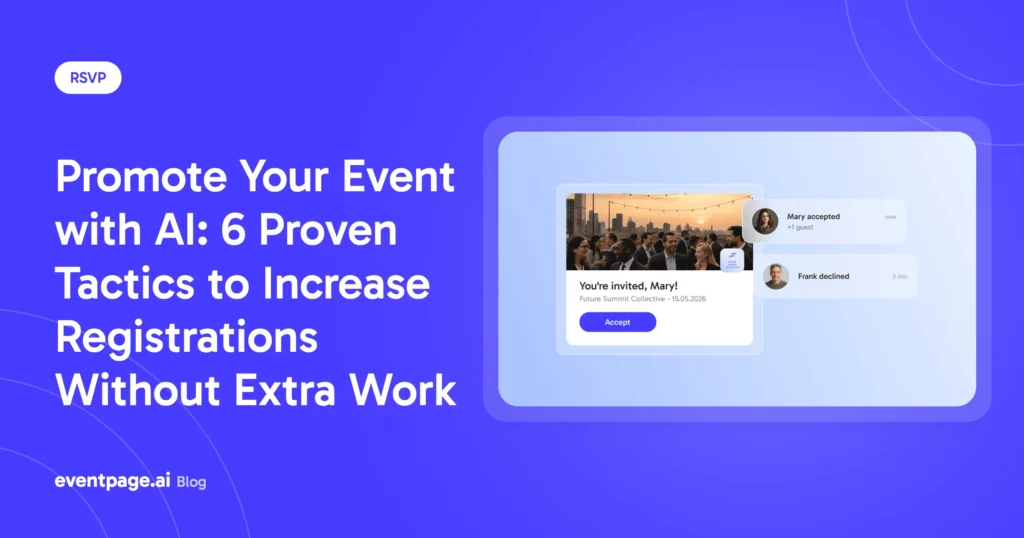
For a festival involving members, families, sponsors and external guests, invitations and registrations need to work together. Instead of collecting replies through multiple WhatsApp groups and private messages, clubs can connect their invitation communication to a central event page and registration form.
This turns attendance numbers and food preferences into a reliable basis for further event planning. At the same time, event information remains available in one central location. With eventpage.ai, clubs can connect invitations, registration and check-in in one continuous process.
Your next step
Put your 2027 summer festival on the agenda of your next board meeting. Three decisions should be made: the date, the venue and the person coordinating the event.
Start with eventpage.ai and bring your next club festival together in one place, from the first invitation to event-day check-in.