Around 80 percent of the planning budget and team time goes into the weeks leading up to an event. For post-event follow-up, teams are often left with whatever time remains between dismantling the event setup and starting the next project – usually just a few days, often only a few hours. Yet this phase is exactly what determines whether an event generates pipeline, community growth or repeat bookings, or whether the collected contacts and feedback disappear into an Excel spreadsheet that no one ever opens again.
This imbalance is no coincidence. Preparation can be planned, scheduled and organized in checklists. Post-event follow-up, on the other hand, is reactive: it depends on how quickly feedback is evaluated, leads are qualified and follow-up messages are sent – and that is exactly where most teams lack a structured process.
Why post-event follow-up is structurally neglected
Three factors repeatedly cause post-event follow-up to become a secondary priority:
First, the team is busy after the event with invoicing, internal reporting and the next event already in the pipeline. Second, the relevant data – registrations, check-ins, survey results and sponsorship metrics – is usually spread across three to five different tools that do not communicate with one another. Third, there is often no clear ownership: Who evaluates the survey, who writes the follow-up emails, and who qualifies the leads for sales?
The impact can be quantified. Feedback surveys sent more than 48 hours after an event lose, on average, around half of their response rate compared with surveys sent on the day of the event. And leads contacted only after a week convert significantly worse than those receiving a personal message within 24 hours – a pattern that appears across industries in almost every B2B lead-response study.
The most costly post-event follow-up mistakes
Delayed feedback. The longer the gap between the event and the survey, the less precise and complete the answers become. Attendees remember the core message, but no longer the details about the venue, catering or individual sessions – exactly the information that would be valuable for planning the next event.
Lack of segmentation. Sending the same thank-you email to all attendees ignores the fact that a sponsor needs different information from a first-time visitor, and a speaker needs something different from a returning guest. Without segmentation, the opportunity to turn a one-time contact into a long-term relationship is lost.
No structured lead scoring. Sales teams are often handed an unsorted attendee list instead of a prioritized overview with context: Who registered for which sessions, who spent time at the booth, and who indicated concrete purchase intent in the survey? Without this context, sales teams work through cold and hot leads in the same order.
How AI makes post-event follow-up predictable
The solution is not necessarily more staff, but the automation of recurring steps that are currently completed manually and too late.
Evaluate feedback in real time. AI systems can cluster open-text survey responses by topic within minutes – for example, criticism relating to event flow, the venue or content quality – instead of requiring a team member to manually read hundreds of responses. This reduces the time between survey completion and usable insights from days to hours.
Automatically personalize follow-up sequences. Instead of sending a mass email, follow-up actions can be differentiated automatically based on attendance data: individual session summaries for attendees, lead reports for sponsors and thank-you messages with a personal reference for speakers. The underlying logic is defined once, while the system handles the personalization.
Score leads based on behavior. By combining registration data, session attendance, booth visits and survey responses, a score can be calculated that immediately shows sales teams which contacts are worth calling first. This significantly reduces response time for leads with the highest purchase likelihood.
Automatically compile reporting. Attendee numbers, engagement metrics, sponsorship results and feedback highlights can be combined into a stakeholder report that would otherwise require days of manual work across multiple exports.
Practical framework: The first 72 hours after the event
- Hour 0–4: Automatically send a thank-you email and feedback survey to all attendee segments immediately after the event – not on the next working day.
- Hour 4–24: Cluster the first feedback responses by topic and escalate critical signals, such as repeated complaints, to the event team.
- Day 1–2: Prioritize leads based on their score and hand the top contacts over to sales with a personal message.
- Day 2–3: Automatically generate and send the sponsorship report with reach and lead figures.
- Day 3: Create a consolidated internal stakeholder report – including key learnings for the next event.
Teams that use this window consistently turn post-event follow-up from an administrative burden into a measurable growth driver.
Where eventpage.ai comes in
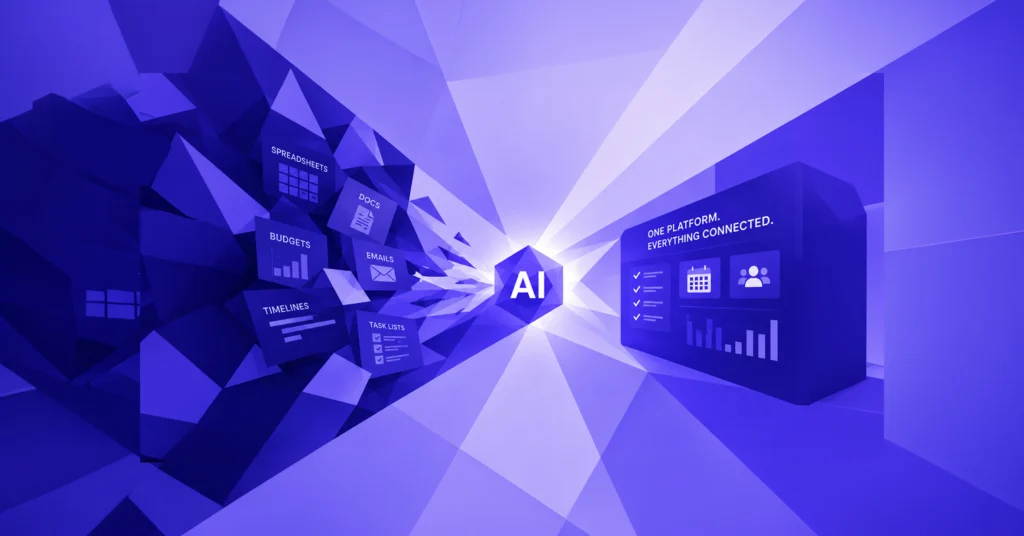
eventpage.ai brings registration data, check-ins, feedback and sponsorship metrics together in one central platform, reducing the number of tools teams need to search manually after an event. The integrated AI analysis automatically summarizes open-text feedback, prioritizes leads based on their interactions during the event and creates templates for segmented follow-up communication – so the first 72 hours after the event no longer depend on the team’s available capacity, but on a clear and repeatable process.
Next step
Teams that want to improve their post-event follow-up can start by looking at a few simple questions: How many days currently pass between the end of the event and the first follow-up message? How many tools are involved in the follow-up process? With eventpage.ai, event processes can be managed centrally and recurring tasks can be automated, helping teams make post-event follow-up faster and more structured.
Connecting invitation management and post-event follow-up
Efficient post-event follow-up does not begin after the event. Structured invitation management already creates the data foundation needed to communicate with attendees in a targeted way once the event is over. When invitations, registrations, acceptances, declines and actual check-ins are recorded centrally, teams can distinguish much more precisely which communication is relevant for which contact.
For example, attendees can be addressed differently from no-shows, first-time visitors differently from returning guests, and highly engaged contacts differently from people with little interaction. Invitation management and AI-powered follow-up automation therefore work directly together: data from the invitation and registration phase becomes the basis for segmented follow-up actions, lead prioritization and more meaningful measurement of event ROI.
With eventpage.ai, invitations, registrations and attendee management can be connected with the wider event process. This keeps the attendee history in one place and makes it available for personalized communication after the event as well as for the next event.
Want to connect invitation management and post-event follow-up in one seamless process?
Sign up for free with eventpage.ai.