Exhibitor management is often reduced to a single problem by event teams: who gets which booth space? That is a misunderstanding that can become costly. Floor plan tools solve a logistical problem, but they do not solve what actually frustrates exhibitors after an event – unclear communication before the event and lost leads afterwards.
When you speak to exhibitors, you rarely hear complaints about booth size. More often, the issues are missed deadlines for logo uploads, three parallel email threads containing different information, and a lead export that only arrives in the inbox two weeks after the event – if it arrives at all. This is exactly where the decision is made whether an exhibitor will book again the following year.
Booth booking: Where Excel and email chains still dominate
A look at the reality of many medium-sized conferences and trade shows reveals a familiar picture: a booking spreadsheet in Excel, a folder containing contracts in different versions, and an inbox full of questions about payment deadlines and booth equipment. Every change to the floor plan has to be entered manually into several systems at the same time – and the risk of errors grows with every additional exhibitor booking.
Digital exhibitor portals solve part of this problem: self-service booking, automated invoicing, and one central place for contract documents. This noticeably reduces administrative questions. But a portal alone does not turn poorly organized exhibitor communication into good communication. The structure behind it has to work: clear deadlines, one dedicated contact person per exhibitor, and a status that both sides can view at any time.
Exhibitor communication: The underestimated driver of satisfaction
There are often eight to twelve weeks between signing the contract and the event day, during which exhibitors need information: setup times, deliveries, technical connections, marketing material deadlines, and attendee numbers for booth planning. If this communication takes place across scattered emails, the event team quickly loses track of which exhibitor has already received which information.
A structured communication plan with automated reminders – such as “Logo upload due in 5 days” or “Technical check still pending” – can significantly reduce errors. Exhibitors who receive information early and consistently arrive better prepared for the event. In turn, this reduces the workload for the event team on the event day itself, when there are already enough other things demanding attention.
Lead capture at the booth: The moment that determines ROI
The greatest loss of value in exhibitor management does not happen before the event, but during and immediately afterwards. An exhibitor booth with strong traffic but poor lead capture is a wasted investment. Handwritten business cards, scanned badges without context, or an Excel export containing names and email addresses without conversation notes – all of this makes follow-up unnecessarily difficult for exhibitor sales teams.
Digital badge scans with a direct connection to a CRM fundamentally change this. Every scanned contact is stored in a structured way in the system, supplemented with location, time and, ideally, a short assessment of the conversation. Exhibitors who receive an organized lead export on the evening of the event can begin following up the next business day instead of waiting for weeks – and that speed often makes the difference when it comes to closing a deal.
How AI can support exhibitor processes in practice
Three areas in exhibitor management benefit particularly from AI-supported processes:
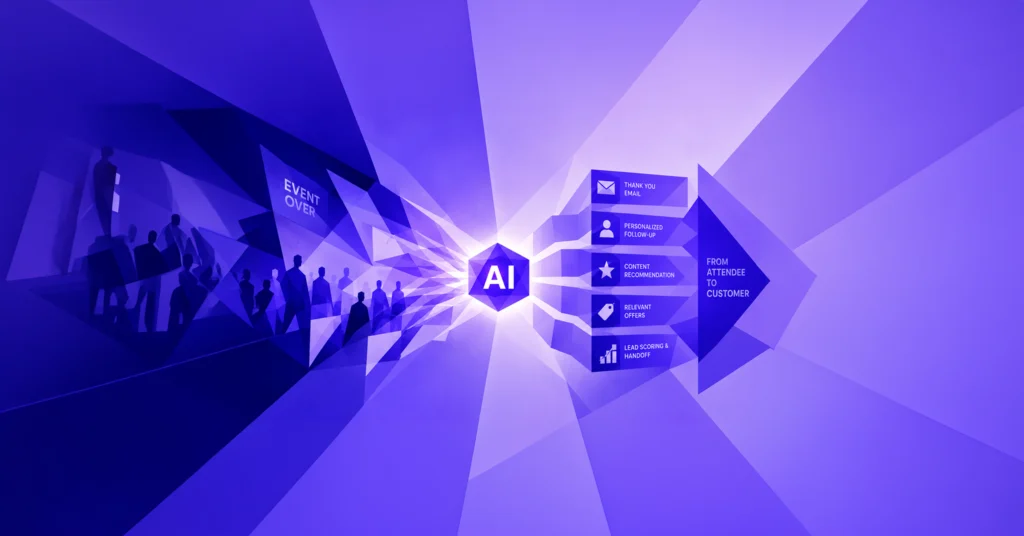
First, lead scoring directly at the booth. Instead of treating every scanned contact equally, an AI model can classify leads based on factors such as conversation duration, location at the trade show, company size and interaction history. Exhibitor sales teams can immediately see which contacts should be prioritized.
Second, automated follow-up communication. Personalized follow-up emails that refer to the actual conversation at the booth can be created with AI support in minutes instead of hours – a factor that can save significant time across an event with twenty or more exhibitors.
Third, matching exhibitors and attendees before the event. Predictive matching based on interest profiles increases the likelihood of relevant booth visits – turning a passive exhibitor booth into a place with qualified traffic instead of simply relying on passing visitors.
Where eventpage.ai comes in
eventpage.ai combines exhibitor communication, booth booking and lead capture in one central platform. Exhibitors manage their booking, materials and deadlines themselves in the portal, while event teams can view the status of all exhibitors at any time – without comparing Excel files and without scattered email threads. Scanned leads are stored in a structured format and in real time, ready to be exported directly for exhibitor sales teams. For teams organizing several events per year, this noticeably reduces the administrative workload per exhibitor.
Anyone who wants to explore the possibilities of digital event organization, structured communication and lead capture can register for free with eventpage.ai.
Conclusion
Exhibitor management is not purely a logistics issue. Allocating booth space is the easy part. Anyone who wants to retain exhibitors in the long term needs to focus primarily on two areas: structured and reliable communication before the event, and fast, clean lead capture during and after the event. Both can now be digitized with comparatively little effort – and the impact on exhibitor satisfaction and rebooking rates can be measurable.
Invitation Management as the foundation for better exhibitor management
Professional exhibitor management does not begin with booth booking. Invitation Management also influences how successful a trade show or conference will be for both organizers and exhibitors. When invitations, registrations and attendee data are managed centrally, a reliable data foundation is created before the event for communication, capacity planning and later lead capture.
For exhibitors in particular, it is crucial to know which target groups are actually attending the event. Digital Invitation Management allows event teams to send targeted invitations, manage registrations centrally and connect up-to-date attendee data with other event processes. Instead of transferring information between an invitation tool, Excel spreadsheets, an exhibitor portal and a lead system, relevant data can remain available throughout the entire event journey.
Combined with exhibitor management software, this creates one continuous process: from invitation and registration to exhibitor communication and lead capture at the booth. eventpage.ai connects these steps within one platform and helps event teams manage attendee and exhibitor processes centrally.
Ready to manage exhibitor communication, invitation management and lead capture in one platform? Create your free eventpage.ai account and organize your trade show and event processes from one central place.