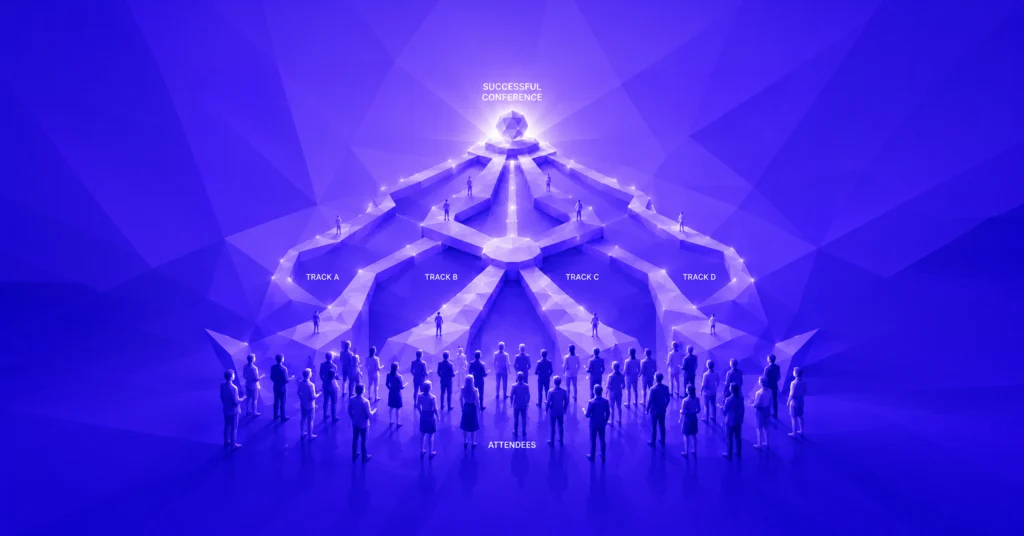
The biggest challenge for modern communities is rarely the event itself. The real test begins afterward: How do you keep your community engaged, connected, and active between events? Many community managers know the pattern. The event is a success, members are energized, conversations are flowing — and then a few days later, everything goes quiet.
This is exactly where long-term community success is decided. Members rarely leave a community overnight. More often, they become quieter, less engaged, and eventually disappear altogether.
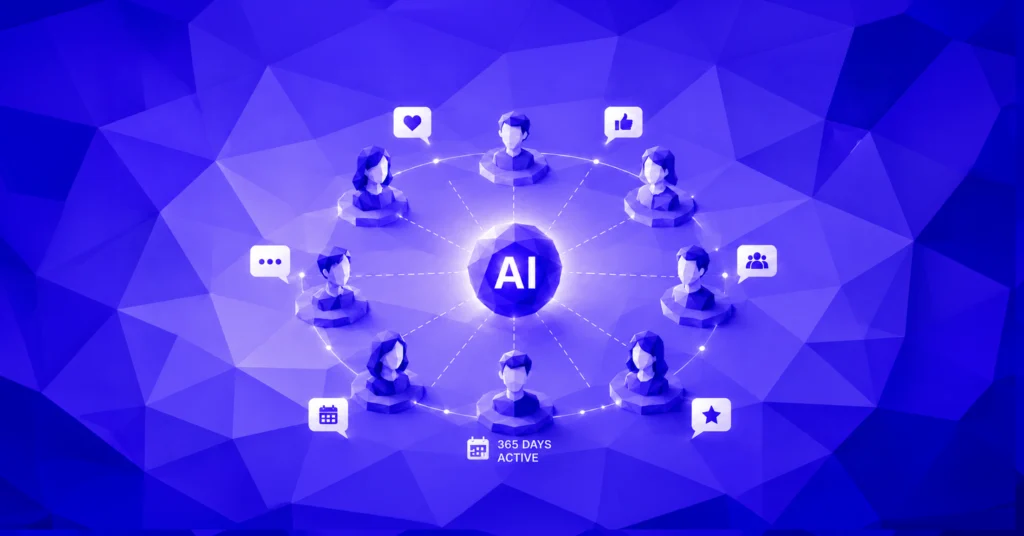
The good news: With the right community engagement strategies and AI-powered workflows, the time between events can become one of your strongest growth levers. Instead of constantly planning new events, you can create meaningful touchpoints that keep members engaged throughout the year.
Why Community Engagement Between Events Matters
Many organizations measure community success by event attendance. But true engagement isn’t built during the event alone — it happens in the weeks that follow. If members only hear from you when an event is coming up, long periods of silence can quickly lead to declining participation.
The days immediately after an event are especially valuable. Conversations are fresh, new connections have been made, and motivation is high. If this momentum is not maintained, engagement often drops significantly.
Successful communities understand that community management is a continuous process. Events are important milestones, but the real relationship-building happens in between.
Lever 1: Personalized Follow-Ups Within 72 Hours
Many communities send a generic thank-you email after an event. The problem? It feels relevant to almost no one.
Personalized follow-ups are far more effective. The best messages:
- reference a specific moment from the event,
- share relevant resources or insights,
- encourage a simple next step or response.
AI can help generate personalized follow-up suggestions based on event activity, attendee profiles, and interactions. What was once a generic administrative task becomes a meaningful community touchpoint.
Lever 2: Turn Event Content Into Micro-Content
Most events generate valuable content that often ends up buried in lengthy recordings or recap documents. The reality is that very few members consume all of it.
Instead, break your event content into smaller, more engaging formats:
- key takeaways,
- quote graphics,
- best practices from discussions,
- community questions,
- practical implementation tips.
This keeps the conversation alive for weeks after the event. Instead of creating value for a single day, your event becomes a multi-week engagement engine.
Lever 3: Enable Member-to-Member Matching
Many communities rely heavily on newsletters, announcements, and broadcasts. However, sustainable engagement is often driven by relationships between members.
Intentional matching helps create those connections. For example, connecting members who:
- share similar challenges,
- work on comparable projects,
- have complementary expertise,
- can learn from one another.
AI-powered community platforms can identify these opportunities automatically and suggest meaningful introductions. The human connection remains personal — but finding relevant matches becomes far more scalable.
Lever 4: Create Recurring Community Rituals
Consistent micro-formats help keep members engaged even when no major event is taking place. Successful examples include:
- Question of the Week
- Monthly Progress Updates
- Peer Learning Sessions
- Lessons Learned Discussions
- Member Spotlights
The advantage is simple: the community generates its own momentum while community managers focus on facilitating and nurturing participation. AI can support these initiatives with content ideas, reminders, summaries, and discussion prompts.
Lever 5: Identify Silent Members Before They Leave
Most members do not cancel immediately. Disengagement usually happens gradually. Participation drops, conversations stop, and event registrations become less frequent.
Communities that recognize these signals early can take meaningful action. Modern community platforms use engagement data to identify members whose activity is declining, making it easier to reach out before they disappear entirely.
The goal is not to automate more messages. The goal is to recognize when a human conversation can make a difference.
Lever 6: Use Event Preparation as an Engagement Tool
Community engagement does not start when the event begins. The preparation phase offers multiple opportunities to activate members:
- pre-event surveys,
- questions for speakers,
- member introductions,
- community challenges,
- topic voting.
These activities create anticipation and connection before the event even starts. At the same time, organizers gain valuable insights that can improve the event experience. AI can help structure responses, identify themes, and generate recommendations for the agenda and follow-up strategy.
Lever 7: Measure Engagement, Don’t Just Feel It
Many communities focus primarily on membership growth and event attendance. While important, these metrics often reveal problems too late.
Leading indicators of community health include:
- response rates to personal outreach,
- member-to-member connections,
- participation in community formats,
- time to first contribution,
- reactivation rates of inactive members.
Tracking these metrics consistently allows community leaders to spot trends early and act before engagement declines. AI-powered dashboards can surface patterns and suggest the next best actions.
How eventpage.ai Helps Drive Community Engagement Between Events
Community leaders should spend their time building relationships — not managing spreadsheets, tools, and manual follow-up processes. That’s where eventpage.ai comes in.
eventpage.ai combines event management, community engagement, and AI-powered workflows in a single platform. It helps organizations manage events, activate members, and create meaningful interactions long after an event has ended.
- Personalized follow-ups based on event activity
- Intelligent member matching
- Engagement heatmaps to identify churn risks early
- Templates for recurring community programs
- Centralized management of events, members, and interactions
AI does not replace human relationships. It removes repetitive work so community managers can focus on creating meaningful connections.
Want to see these workflows in action? Discover how eventpage.ai brings community management, member engagement, and event experiences together on a single platform.
FAQ: Community Engagement Between Events
Why does community engagement often drop after events?
Without structured touchpoints, relevant content, and ongoing conversations, engagement naturally decreases once the event momentum fades.
What is the fastest way to increase engagement after an event?
Personalized follow-ups within 72 hours are one of the most effective ways to continue conversations and strengthen member relationships.
How can AI support community management?
AI helps with personalization, content creation, member matching, engagement analysis, and workflow automation, enabling even small teams to scale community experiences.
Which metrics should community leaders track?
Beyond attendance numbers, response rates, member connections, participation levels, and reactivation rates are strong indicators of long-term community health.
Conclusion: Communities Thrive Between Events
Successful communities are not built through more events. They are built through consistent interaction, relevant content, and meaningful relationships between events.
Organizations that intentionally invest in the space between events create stronger member engagement, higher retention, and sustainable community growth.
Communities do not grow because you host more events. They grow because you create more meaningful interactions between them.
If you’d like to see how personalized follow-ups, intelligent member matching, and AI-powered engagement workflows work in practice, we’d be happy to show you eventpage.ai live.
In a short demo, you’ll discover how to activate members year-round, increase engagement at scale, and reduce the manual effort required to run a thriving community.